
Articulate’s

Impact

The Why Behind Our Work
A

t the heart of Articulate’s DNA is a deep commitment to being 
a force for good. Our products are not only built to enable workplace learning, but also to unlock human potential and transform the lives that learning touches. This very force is what animates On Purpose and sustains all the impact work we do here at Articulate. As a human-centered organization, we’re driven by the impact learning has on individuals and communities, the opportunities it creates, and the dignity it helps restore.

Over the years, I’ve seen the incredible evolution of this company. We’ve built beautiful, powerful, standard-defining software, yes. But what has always defined Articulate is not the product—it’s the people who use it. When I look at the nonprofits featured in this magazine, I see a reflection of the very thing that drew me here in the first place: the belief that learning is one of the most profound means to transform society.

For example, I think about Rare, an environmental nonprofit that trains conservation leaders in 60 countries. E-learning allows them to train practitioners across languages and bandwidth levels, equipping them to shift habits that directly affect the planet’s survival.

Every organization featured in this magazine shares a simple truth: Learning ignites change, and e-learning gives them the tools to sustain it.

Why Nonprofits?
W

e focus on nonprofits in this inaugural edition because they remind us of what’s at stake—and what’s possible—in this transformational time. Their essential work around the globe calls us to uplift, inspire, and support one another in meaningful ways.

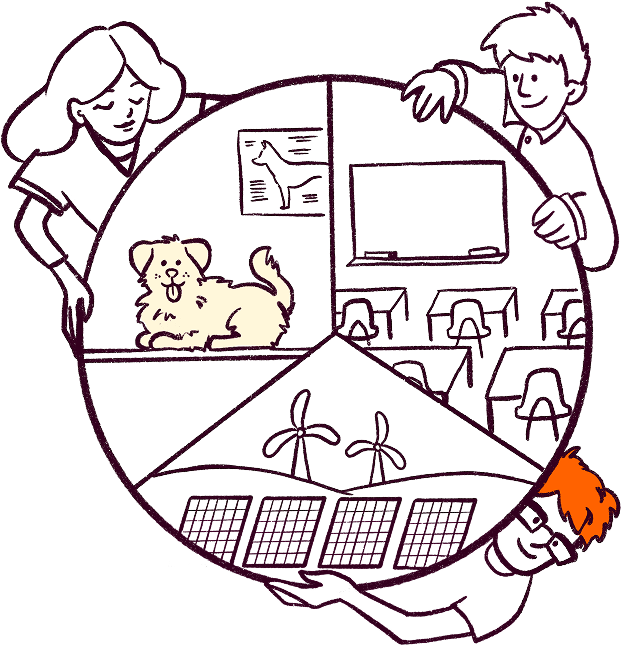
Around the world, nonprofits take on society’s most pressing challenges, from early childhood education and health equity to climate action and animal welfare. According to the Bureau of Labor Statistics, in the U.S. alone, nearly 1 in 10 U.S. workers are employed by a nonprofit.

Globally, these organizations deliver essential services to billions, often on shoestring budgets. What they lack in resources, they make up for in purpose and ingenuity.

These aren’t just stories—they’re proof that small investments in knowledge ripple into outsized impact.

When we support nonprofits, we’re betting on the transformative power of learning. Consider this: A single training update for a transplant coordinator at the United Network for Organ Sharing can literally mean a life saved. At the National Head Start Association, professional development for an educator can spark a parent’s decision to pursue a degree, changing a family’s economic trajectory for generations.

These aren’t just stories—they’re proof that small investments in knowledge ripple into outsized impact.

Our Commitments
A

t Articulate, we’re also committed to building that future together, because we know we can’t solve the world’s toughest challenges alone. We’re leaning into the power of collective impact. That’s why our social impact commitments go beyond words and show up in action:

  • Donation matching. In one study by the Big-Give Research Initiative, 84 percent of respondents said they’re more likely to donate when a match is offered. Every dollar an employee gives to a cause they care about, Articulate matches—doubling impact, multiplying hope.
  • Volunteer time off. Research tells us that employees who volunteer report higher engagement and well-being at work. That’s why we encourage our people to step away from their desks, on paid time, to serve their communities. Purpose isn’t something you squeeze in after hours—it’s part of the workday, and part of who we are.
  • Philanthropic giving. At Articulate, we’re not just donating, but investing in our global communities through our Cash for Change programs and in-kind donations. Over the last five years, we’ve made cash grants to 22 organizations committed to advancing human, animal, and environmental causes.
Our matching program drove a 450 percent increase in donations year over year.

These commitments are only the beginning. In 2024, we launched our first company-wide impact campaign, led by our Head of Social Impact, Christy Schmidt. The response was extraordinary: 70 percent of employees participated—twice the U.S. average—and our matching program drove a 450 percent increase in donations year over year.

Looking Ahead
A

s I look to the future of Articulate, I see both challenges and an abundance of opportunity. We live in a world in flux—technologies are advancing faster than policies can keep up, economies are under strain, and societies are wrestling with questions that defy simple solutions. Yet all the while, people learn—and through learning, people change.

When we stand together—practitioners, partners, board members, and investors—we amplify what learning can do. A single tool can scale across continents. A single idea can shift an industry. A single moment of insight can transform a life.

Knowledge, when shared, is a form of justice, a spark of equity, and a catalyst for change.

Our role is to keep showing up with tools that expand access, with support that fuels courage, with an imagination that opens doors. To keep partnering with those tackling humanity’s hardest problems. And to keep believing that knowledge, when shared, is a form of justice, a spark of equity, and a catalyst for change.

Five Questions to Ask Your Organization About Purpose
T

he stories in this magazine are an invitation to imagine what’s possible. Use these questions to spark conversations in your team, your boardroom, or even over coffee with a colleague. There are no wrong answers—only starting points for discovery.

  • Who is at the heart of our learning?
    Are we creating training that truly centers the people we serve—and celebrating their voices along the way?
  • What doors are we opening?

    How are we clearing barriers so more people—across places, languages, and bandwidths—can step inside and learn?
  • How do we spot real impact in the stories that shape us?
    Beyond numbers on a dashboard, what stories of confindence, connection, or change remind us we're making a difference?
  • How does our learning spark belonging?

    Are we designing experiences that help people feel part of something bigger, where learning builds community instead of isolation?
  • Is purpose something we say, or something we practice?

    Do our everyday choices mirror the values we aspire to, turning company values into lived practice?

Purpose isn’t a plaque on the wall—it’s a rhythm of choices, big and small. The more often we ask ourselves these questions, the closer we move from good intentions to lasting impact.

View the story as a PDF
Download PDF