


Protecting Nature by Changing Human Nature

Rare trains conservation leaders to drive change by influencing how people interact with the environment.

Rare
Kate Mannle
Director of Training Programs
MISSION

To inspire change so people and nature thrive

INDUSTRY

Environmental conservation

HEADQUARTERS

Arlington, VA

FOUNDED

1973

LEARNING AUDIENCE

Conservation and sustainability leaders and practitioners

Changing minds, protecting the planet
R

ecyclables and compostable food waste piled together in a university cafeteria. Disposable diapers floating in a river. Plastic water bottles, used only once. These aren’t just environmental snapshots. They all trace back to a common source: human behavior.

Almost all environmental challenges that we face have one thing in common,” says Kate Mannle. “People are both the problem and the solution.”
At Rare, changing that behavior is the driving force behind protecting nature and fighting climate change.

As the Director of Training Programs at Rare’s Center for Behavior & the Environment, Mannle equips conservation practitioners with the skills to shift minds and actions, not just ecosystems.

“I grew up in a fishing community in Massachusetts, and seeing how people interact with nature has always been a huge part of my life. ” she says. “Rare’s focus on people-powered conservation is what initially drew me in 17 years ago, and it’s what still motivates me today.”

“Almost all environmental challenges that we face have one thing in common,” says Kate Mannle. “People are both the problem and the solution.”

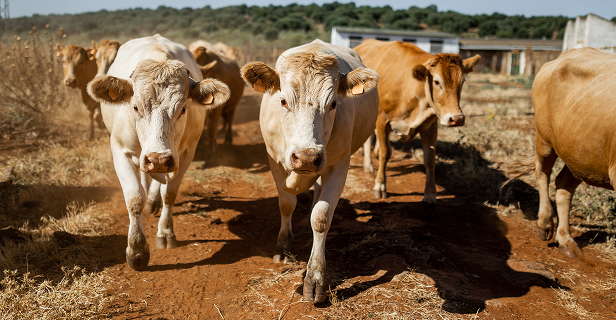
A herd of beige and brown cattle walking towards the camera
Conservation training trailblazers

If conservation had a user manual, says Mannle, it would be co-written by biologists and behavioral scientists.

“The conservation sector tends to be quite siloed between the natural sciences and the social sciences,” she explains. “But both are crucial to be able to enact real change.”

Rare’s Center for Behavior & the Environment  is the first institution in the world dedicated exclusively to behavioral science and design for conservation. It supports Rare’s programs and external partners working to address climate change, overfishing, sustainable land use, food and plastic waste, biodiversity loss, and more.

Rare has trained over 5,000 practitioners in more than 60 countries.

To date, Rare has trained over 5,000 practitioners in more than 60 countries. To reach that scale, says Mannle, learning is essential. Today, the organization offers a range of self-paced and blended learning programs rooted in behavior-centered design.

“We always felt that our in-person training had this indescribable quality—what we would call the ‘Rare magic,’” says Mannle. “We try to capture that in all our digital training, as well.”

But creating that magic online is no easy task. Many learners are in remote areas, face bandwidth limits, or speak different languages. Some are uncomfortable appearing on camera. Regardless of the content, flexibility of training is key.

“E-learning is a powerful equalizer,” says Mannle. “People can learn in their own time, even offline. When they show up to live sessions, they’re fully prepared and ready to participate.”

View the story as a PDF
Download PDF
E-learning
is
a
powerful
equalizer.
People
can
learn
in
their
own
time,
even
offline.
When
they
show
up
to
live
sessions,
they’re
fully
prepared
and
ready
to
participate.
Kate Mannle, Director of Training Programs
Social learning for behavioral change

Social learning is a central part of the Rare’s model. In one flagship course, learners are grouped into teams to apply behavioral strategies to fictional case studies. Participants collaborate across time zones, cultures, and career paths to find solutions.

“There’s something truly special about bringing people together like that,” says Mannle. “With e-learning, we can create collaborative environments that wouldn’t be practical or affordable in person.”

Often, Rare customizes its training for certain partners to make the content as relevant as possible to their day-to-day work—as was the case for the organization’s BE.Innovative program.

Participants within a partner’s network who took one of Rare’s signature self-paced courses could apply for more in-depth virtual training, including a competition complete with funding and coaching. Organizations from all over the world applied the course’s methodology to their own work.

The results were stunning: One group increased food waste segregated in university dorms from 0 percent to 40 percent. In another, 90 percent of a target group became active users of reusable diapers during the project. A third motivated 80 percent of their group to switch to a more eco-friendly water bottle choice for drinking water.

80%

of individuals switches to a more eco-friendly water bottle choice

90%

of a target group became
active users of reusable diapers

“When learners get the same high-quality content but can absorb and apply it in their own context, amazing things happen,” Mannle says. “That’s the power of behavior-centered design—and the impact of learning to deliver it.”

Close-up of cabbage leaves